

Ajman is about 25 to 28 kilometers from Dubai, roughly 30 to 40 minutes by car. Umm Al Quwain is about 60 to 67 kilometers away, around 45 to 60 minutes. The two emirates sit side by side and are easy to combine in one day.
- Ajman is best for heritage and waterfront stops: the fort museum, the Corniche and the dhow yard.
- Umm Al Quwain is best for nature and family time: mangrove kayaking, a water park and a quiet old town.
Most weekend plans in the UAE point to Dubai, Abu Dhabi or Ras Al Khaimah. The two smallest northern emirates often get skipped, and that is exactly why they work so well for a slower weekend. There are fewer crowds and less traffic once you are past Sharjah. You also get more room to move at your own pace, and prices for food and activities are often lower than in the big cities.
This guide covers both emirates in one route. It includes a realistic day plan, practical tips, and honest notes on what is worth your time. If you want the drive handled for you, an Ajman chauffeur service can cover the whole route from pickup to drop-off.
Ajman and Umm Al Quwain at a Glance
The two emirates are neighbors on the northern coast, but they feel quite different from each other.
| Ajman | Umm Al Quwain | |
|---|---|---|
| Distance from Dubai | About 25 to 28 km | About 60 to 67 km |
| Typical drive | 30 to 40 minutes | 45 to 60 minutes |
| Size and feel | The smallest emirate, compact and urban | Quiet and spread out, with a coastal old town |
| Best for | Heritage, the Corniche, dhow building | Mangroves, kayaking, water park, birdwatching |
| Time needed | Half day | Half day to a full day |
The two emirates are roughly 30 kilometers apart, so moving from one to the other takes about half an hour. Ajman feels like a small city, with apartment towers, malls and a busy seafront. Umm Al Quwain feels more like a coastal town, with lagoons, low buildings and long empty stretches of shoreline.
Getting There From Dubai
The route runs north through Sharjah on the main coastal highways. Traffic is heaviest on the Dubai and Sharjah side, and it eases once you reach Ajman.
- Both emirates are reached by the E11 coastal road, with Emirates Road as an outer alternative when the coast is congested.
- Leaving Dubai early, before the morning peak, avoids the slowest part of the drive.
- Ajman comes first and Umm Al Quwain second, so the natural order is south to north.
- The drive back is usually easier if you leave Umm Al Quwain by mid afternoon, before the evening rush into Dubai.
- Public buses run to both emirates, but a day with several stops is awkward without a car.
The first stretch through Sharjah behaves like a commuter route, and the same peak hour pattern described for Sharjah to Dubai applies here. On Friday afternoons and Sunday mornings, expect slower movement around the Sharjah border.
Ajman: What to See
Ajman is small enough that its main sights sit within a short drive of each other. You can see the highlights in a relaxed morning without rushing.
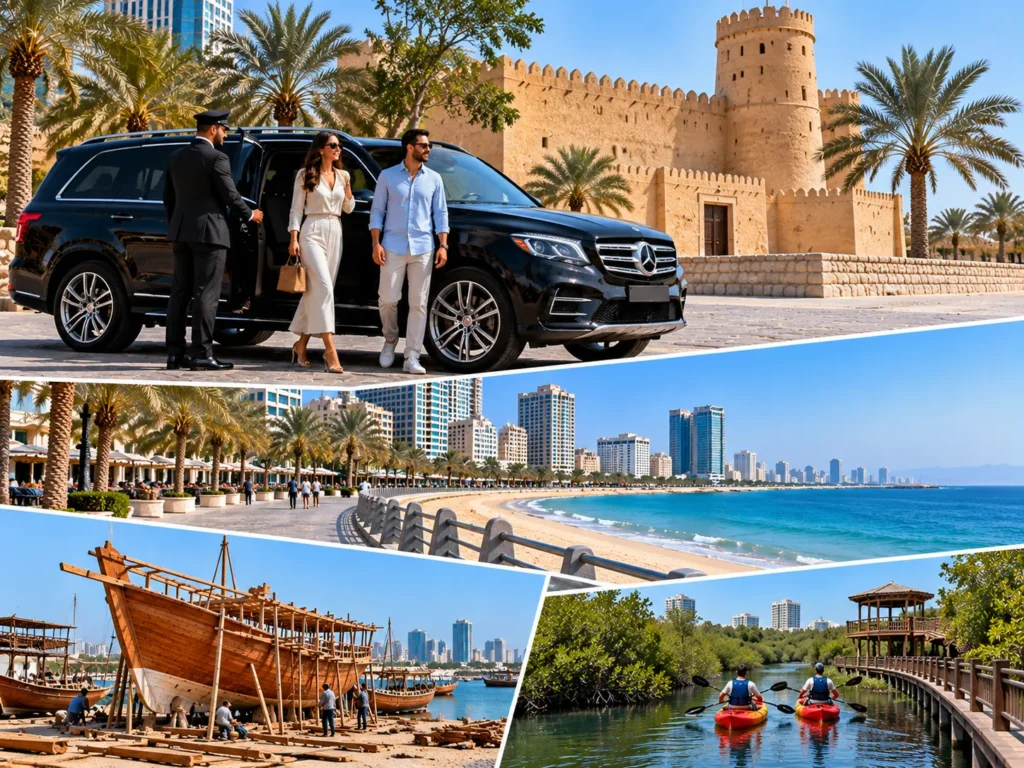
Ajman Museum
The museum is housed in an 18th-century fort that served as the ruler’s residence until 1970. Inside, rooms show the history of the emirate through traditional weapons, manuscripts, old photographs and reconstructions of daily life, including pearl diving and old markets. It is one of the better small museums in the UAE and takes about an hour to see properly. Opening hours vary by day, so check before you go, especially on Fridays.
The Corniche
The Corniche is a waterfront promenade of around four kilometers along the Gulf, popular for walks and jogging. The sand is clean and the water is shallow, so it is a good spot for a short swim in the cooler months. Cafés and casual restaurants line the road, which makes it an easy place for coffee or lunch. It fills up in the evening, especially at weekends.
The Dhow Building Yard
At the northern end of Ajman Creek, craftsmen still build wooden dhows by hand, using methods passed down over generations, while newer fiberglass boats are built nearby. Watching from the edge of the yard is free, and it gives a real sense of a trade that shaped the whole coast. Keep a safe distance from the work and ask before taking close photos of the workers.
Al Zorah Nature Reserve
Al Zorah is a protected mangrove area on the northern edge of Ajman, with walking paths and kayaking routes. Herons, kingfishers and, in some seasons, flamingos can be seen here. It is a calm contrast to the city side of Ajman and fits well in the early morning or late afternoon, when the light is soft and the heat is lower.
Umm Al Quwain: What to See
Umm Al Quwain is where the pace really slows down. It is the least populated of the seven emirates, and the main draw is nature, space and a sense of the older UAE.
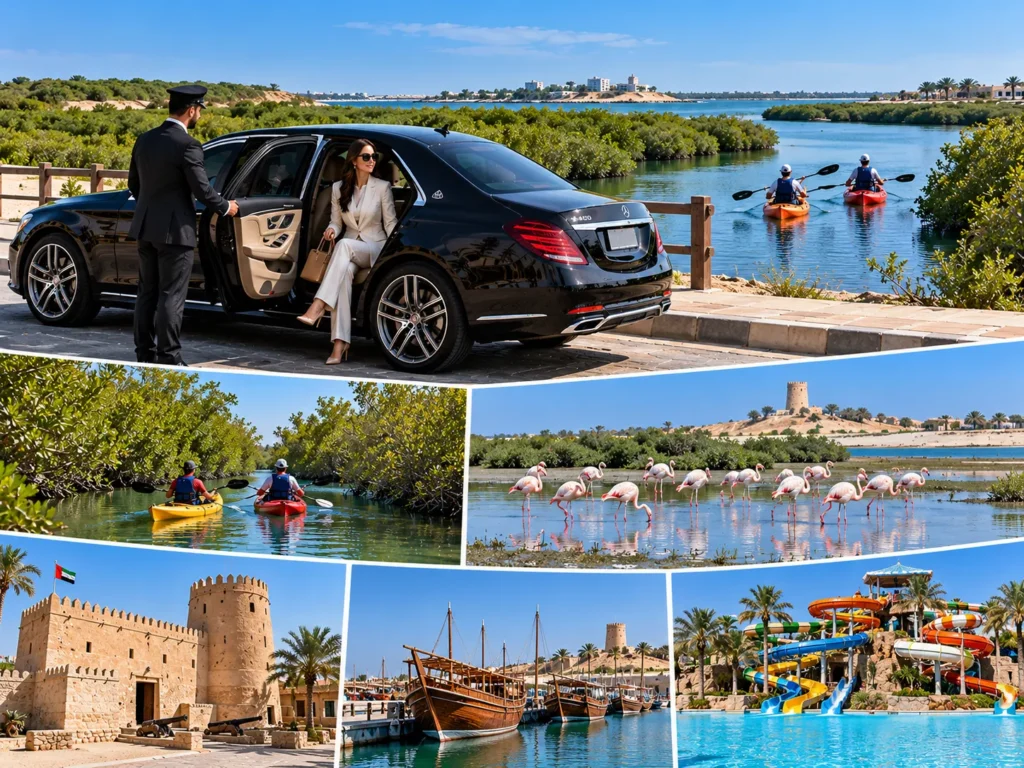
Mangroves and Kayaking
The mangrove channels around the emirate are best explored by kayak, usually on a guided tour of one to two hours. The water is calm and shallow, so tours suit beginners and families with older children. The cooler morning hours are the most comfortable time to go, and you are more likely to spot birds and small marine life.
Birdwatching Around Khor Al Beidah and Al Sinniyah Island
The lagoon and the nearby island attract flamingos, ospreys, herons and other waterbirds, especially in winter. Al Sinniyah Island also holds important archaeological sites. Access to the island and some protected areas can be restricted, so check what is open in advance or arrange a visit through a licensed tour operator.
Umm Al Quwain Fort and Museum
The old fort in the town center now houses the national museum, with displays on archaeology, heritage and local life, including finds from ancient settlements nearby. It is a short, easy stop of under an hour, and it pairs well with a walk through the old town and down to the harbor.
The Old Harbor and Dhow Yard
Coral stone houses sit around the old harbor, some restored and some left as they were, with a dhow building yard close by. It is an authentic, working corner of the emirate, quieter and less polished than Ajman’s version, and good for photography in the late afternoon light.
Dreamland Aqua Park
Dreamland is one of the largest water parks in the UAE, with around 25 or more slides, rides and pools for different ages. It suits families and works best on a hot day. Plan at least half a day here, and check opening days and ticket prices before you go, since they change by season.
Route Order and a Day Plan
Following the route from south to north avoids backtracking. This plan suits a full day with a driver.
- Morning start from Dubai. Leave by around 8 am so the Sharjah section is clear.
- Ajman Museum and Fort. An easy first stop of about an hour.
- Dhow yard and Corniche. A short drive and a walk, with time for a coffee by the sea.
- Lunch in Ajman. A seafront restaurant or a local café serving fresh fish, before heading north.
- Umm Al Quwain old town and fort. Early afternoon, an indoor stop during the hottest part of the day.
- Mangroves or the coast. Late afternoon suits a quiet stretch of shoreline or a short paddle.
- Return before dark. The drive is easier before the evening traffic builds toward Dubai.
How Much Time to Allow
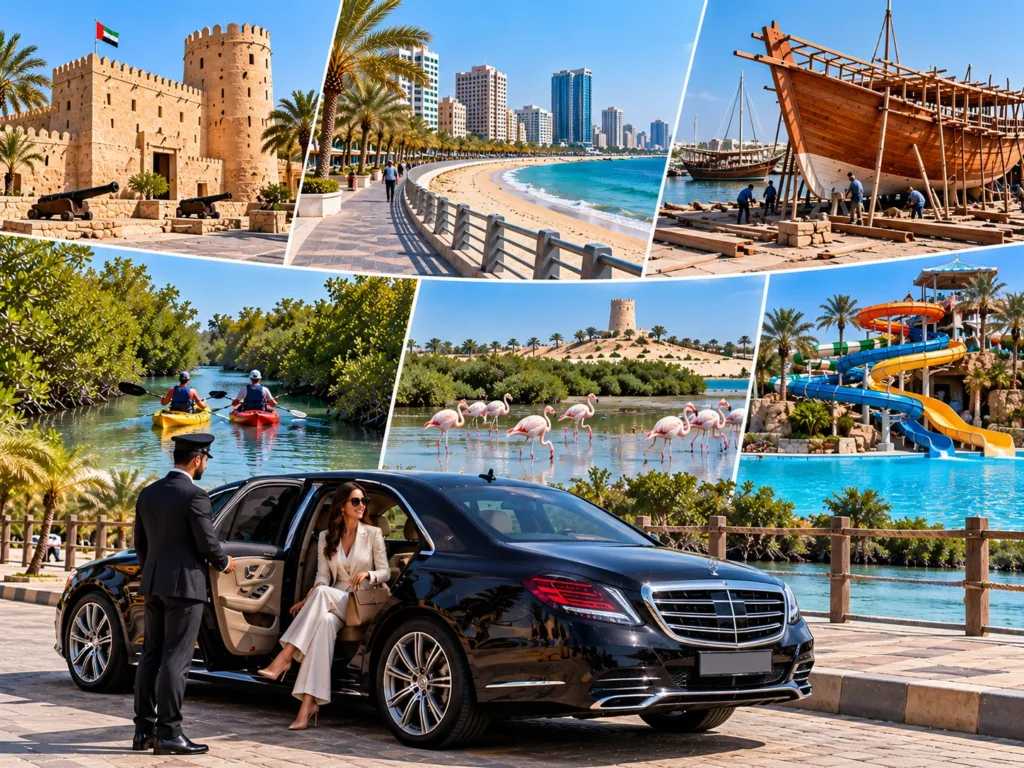
Your plan depends on how many stops you want and what kind of day you are after.
| Time available | Suggested plan |
|---|---|
| Half day | Ajman only: museum, dhow yard and Corniche |
| Full day | Ajman in the morning, Umm Al Quwain old town and mangroves in the afternoon |
| Weekend | Add Dreamland, kayaking and a slower evening on the coast |
A common mistake is trying to fit Dreamland and the museums into one day. The park alone can take most of an afternoon, so it works better as a second day or a separate trip.
Best Time to Go
The season changes how much you enjoy these stops, especially the outdoor ones.
- October to April is the most comfortable period for the Corniche, the mangroves and the old towns.
- In summer, put museums and indoor stops in the middle of the day, and leave water activities for early morning or late afternoon.
- Weekday visits are quieter than weekends, particularly on the Corniche and at Dreamland.
- Early starts help for kayaking and birdwatching, when the water is calm and the birds are most active.
Practical Tips for the Day
A little preparation makes the trip smoother, especially if you are traveling with family.
- Dress modestly in the old towns and museums, with shoulders and knees covered.
- Carry some cash for small cafés, parking and entry fees, although most places accept cards.
- Bring water, sunscreen and a hat, even in winter, since shade is limited at the harbors.
- Book kayaking tours a day or two ahead, as morning slots fill quickly at weekends.
- During Ramadan, opening hours change and eating in public during daylight should be avoided.
What a Chauffeur Changes About the Day
The route mixes several short drives with a few longer ones, and some stops are not well served by public transport. A driver makes the day easier in specific ways.
- One vehicle waits at each stop, so you do not depend on taxis in small towns.
- The driver handles the route between emirates, including the Sharjah traffic on the way out.
- The day can change as you go, dropping one stop and adding another.
- Bags, towels and kayak gear stay in the car, which helps on a mixed day.
- A full day booking is usually the best fit, since the driving is spread across several hours.
The same approach works for other short intercity trips, as explained in Ras Al Khaimah transfer, and the pricing logic for a full day is covered in full-day chauffeur pricing.
Umm Al Quwain on Its Own
Some visitors prefer to focus on Umm Al Quwain alone, especially for nature and family time.
- A day built around kayaking, the old town and the coast works well without Ajman.
- A longer stay suits birdwatching, beach camping and quieter evenings.
- Families often split the day, with the water park in the afternoon and a calm early evening by the harbor.
- Details on local services and pickups are on the Umm Al Quwain chauffeur service page.
Compared With Other Day Trips From Dubai
If you are choosing between destinations, a few contrasts help.
- Inland heritage, oases and mountain views are covered in Al Ain day trip.
- A longer, more formal drive to the capital is described in Dubai to Abu Dhabi.
- Ajman and Umm Al Quwain are the shortest and quietest of these options, and they need the least planning.
Frequently Asked Questions
How far are Ajman and Umm Al Quwain from Dubai?
Ajman is about 25 to 28 kilometers from Dubai, usually a 30 to 40 minute drive. Umm Al Quwain is around 60 to 67 kilometers away, which takes roughly 45 to 60 minutes depending on traffic and where you start.
Can I visit both in one day?
Yes. The two emirates are about 30 kilometers apart, so a full day can include Ajman in the morning and Umm Al Quwain in the afternoon. Keep the plan to a few stops in each rather than trying to cover everything.
What is Umm Al Quwain best known for?
It is known for its quiet pace, mangroves, kayaking, the old fort and museum, and Dreamland Aqua Park. It is one of the least visited emirates, which many people see as part of its appeal.
What is worth seeing in Ajman?
The Ajman Museum in the old fort, the Corniche, the dhow building yard and Al Zorah Nature Reserve are the main stops. Together they make a comfortable half day.
Is kayaking in the mangroves suitable for beginners?
Yes. Guided tours are usually designed for beginners, and the water in the channels is calm. Early morning is the most comfortable time, and sun protection and water are worth bringing.
Do I need a car to visit?
A car makes the day far easier, because the stops are spread out. Public buses run between Dubai and both emirates, but getting between sights within each town is harder without a driver or taxi.
When is the best time of year to go?
From October to April, when outdoor stops are comfortable. In summer, plan indoor visits for midday and keep water activities and the coast for the morning or late afternoon.
Is it better to book ahead or arrange a driver on the day?
Booking ahead is safer, especially at weekends and during the cooler season, when demand is higher. Lead times for different trips are set out in booking windows.
Heading North From Dubai
The two smallest northern emirates reward a short drive with a quiet day and a slower pace. Plan the route from south to north, start early, and keep the stops few. When you are ready, you can arrange the day with Chauffeur Emirates or get in touch to confirm a vehicle and pickup in Dubai. For a one-way run or a return, an intercity transfer can be set up the same way, and the fleet lists the vehicles available. If you are still comparing companies, Reliable Chauffeur Company covers what to check first.
