

A wedding day transport plan needs four things: a list of every group that must move, the fixed points of the day, a buffer on every leg, and one named person who talks to the chauffeur. Start with the ceremony time and the photo window, then work backwards to the first pickup. Plan on the chauffeur arriving before hair and makeup finish, and give the dress, the heat and the venue drop-off their own extra minutes.
Couples spend months on the venue and the guest list, then leave transport as a single line in the schedule. The cars are rarely the problem. The timing between them is. This guide covers the day in order, from the first pickup to the send-off, so the wedding chauffeur booking fits the rest of the day rather than fighting it.
Start With Who Needs to Move, and When
Before any times are set, list the groups. Each one has different needs, and mixing them in one vehicle is where schedules start to slip.
- The bride and her party: the most time-sensitive group, because of the dress, hair and makeup.
- The groom and his side: usually simpler, but they often travel from a different location.
- Parents and elders: need easier access, shorter walks and a calmer pace.
- The photographer and videographer: they often need to arrive ahead of the couple, so they cannot share the bridal car.
- Out-of-town guests: arrivals from the airport, the hotel and back again.
- Local guests: usually drive themselves, but they may still need guidance on parking.
Once each group is named, you can see how many vehicles are really needed and where one car can do two jobs.
Set the Fixed Points of the Day First
Some times cannot move, and every other time is built around them. Write these down before anything else.
- The ceremony start time, and how long guests will be seated before it.
- The reception start time, and whether guests arrive before or after the couple.
- Venue access windows, because some hotels and halls only allow vehicles in at certain times.
- The photo window, which is often tied to light.
For outdoor photos in Dubai, light matters more than most couples expect. Sunset runs from roughly 5:30 pm in winter to after 7 pm in summer, according to timeanddate, and the hour before it is usually the best for portraits. If portraits are planned at golden hour, the ceremony and the car schedule have to leave room for it.
The Day in Order: A Sample Timeline
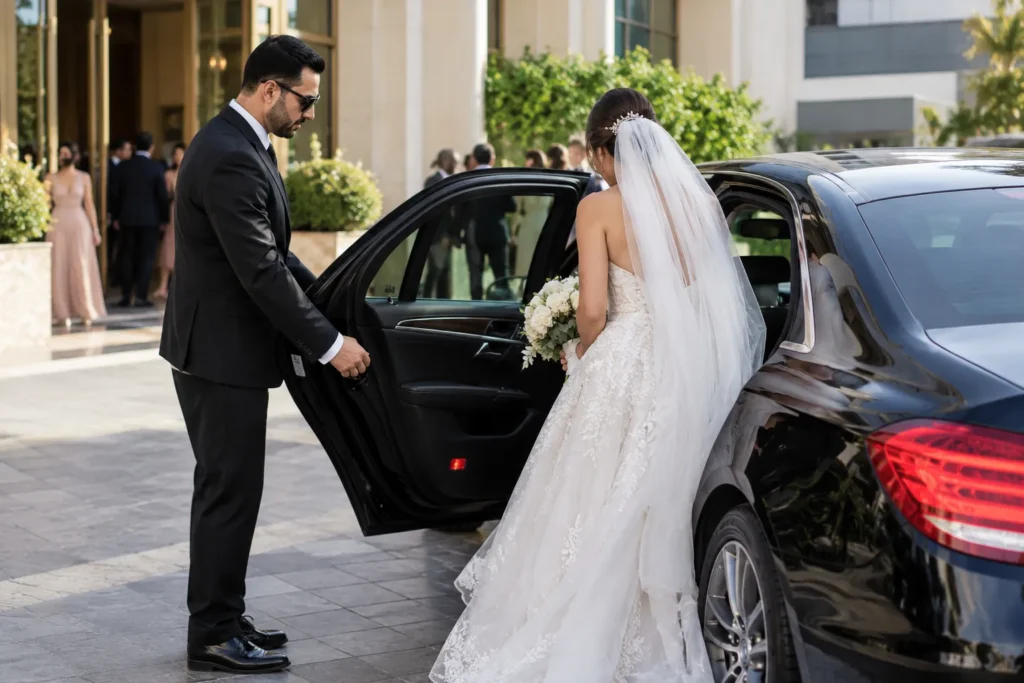
Times here are relative to the ceremony start, since the ceremony itself moves from couple to couple. Adjust each row to your own venue distances.
| Time | Movement | Planning note |
|---|---|---|
| 3 hours before | Chauffeur in position at the getting-ready location | Arrive before hair and makeup finish, not after |
| 2 hours before | Groom side and family pickups begin | Family groups run late, so start them earliest |
| 90 minutes before | Photographer and videographer move ahead of the couple | They need time to set up at the venue |
| 60 minutes before | Bridal car leaves for the venue or first photo spot | Leave a margin for traffic and for the dress |
| 30 minutes before | Arrive at the venue drop-off and hold in the car | Stay in a cool, shaded spot until the cue |
| Ceremony | Vehicle stays nearby | Confirm exactly where it waits |
| After the ceremony | Move to the photo location | Match this to the light, not just the clock |
| Reception start | Couple arrives after guests are seated | Keep the car close but out of the valet queue |
| Late evening | Guest rides begin before the send-off | Do not leave guests waiting for the couple to finish |
| Send-off | Car at the agreed exit point | Check the exit is not blocked by other vehicles |
Buffers That Matter on a Wedding Day
A normal chauffeur booking works with a general margin for traffic. A wedding needs specific ones, because three things behave differently on the day.
Dress and Hair
A long dress, a train and a veil change how long it takes to get in and out of a vehicle, and a rushed entry can crease fabric or damage hair. Plan extra minutes at both ends of every bridal leg. The wide door opening and rear space on larger vehicles help, and the choices are covered in wedding car choices.
Heat and Weather
Dubai summers are hot even in the evening, and a bride standing outside a venue entrance waiting for a cue can be uncomfortable fast. Keep the couple in an air-conditioned car until the last moment, and agree in advance how long the wait is. Outdoor ceremonies in winter can run cooler in the evening, which affects what the couple wears while waiting.
Venue Access and Drop-Off
Many hotels and venues control which vehicles may enter and where they stop. Ask the venue where the bridal car should pull in, whether there is a separate entrance, and when vehicles are allowed through. Handing that detail to the chauffeur in advance avoids a circle of the block at the worst moment.
Who Calls Whom: Coordination on the Day
Most wedding transport problems are communication problems. The cars are on time but nobody knew where to meet.
- Name one point person for transport, such as the planner or a trusted family member, and not the couple.
- Give the chauffeur that person’s number, and give that person the chauffeur’s number.
- Prepare a one page call sheet with names, pickup addresses, drop-off addresses and times for every group.
- Share the same sheet with the planner, the photographer and the bridal party leads.
- Confirm by phone the day before and again on the morning itself.
A company that handles these details calmly is worth finding early, and choosing a reliable chauffeur company explains what to check before you commit.
Guests and Family: The Parts Couples Forget
The bridal car gets the attention. The guests are where many weddings run into difficulty.
- Out-of-town arrivals: book an airport pickup for key family members, and confirm which airport their flight uses with DXB or DWC.
- Hotel to venue: a hotel transfer for guests staying together keeps arrivals close in time.
- Elders and young children: plan a vehicle with easy access and a shorter walk to the entrance.
- Late night departures: decide when guest rides start, so people are not stranded after the couple leaves.
- Luggage and gifts: a vehicle with room avoids a second trip, especially at the end of the night.
The Week Before: Confirmations and Backups
The last week is for checking, not for changing. A short list keeps it under control.
- Reconfirm the vehicle, driver and every pickup time in writing.
- Drive the main route at the same time of day as the wedding, at least once, to see the real travel time.
- Ask for a backup vehicle to be on standby, in case of a mechanical issue.
- Check payment terms and any waiting time that is included.
- Hand the call sheet to the point person and to the chauffeur.
Booking early matters as much as checking late. How far ahead to reserve is explained in booking windows, and the same logic applies to wedding season.
Pre-Wedding Events in the Same Plan
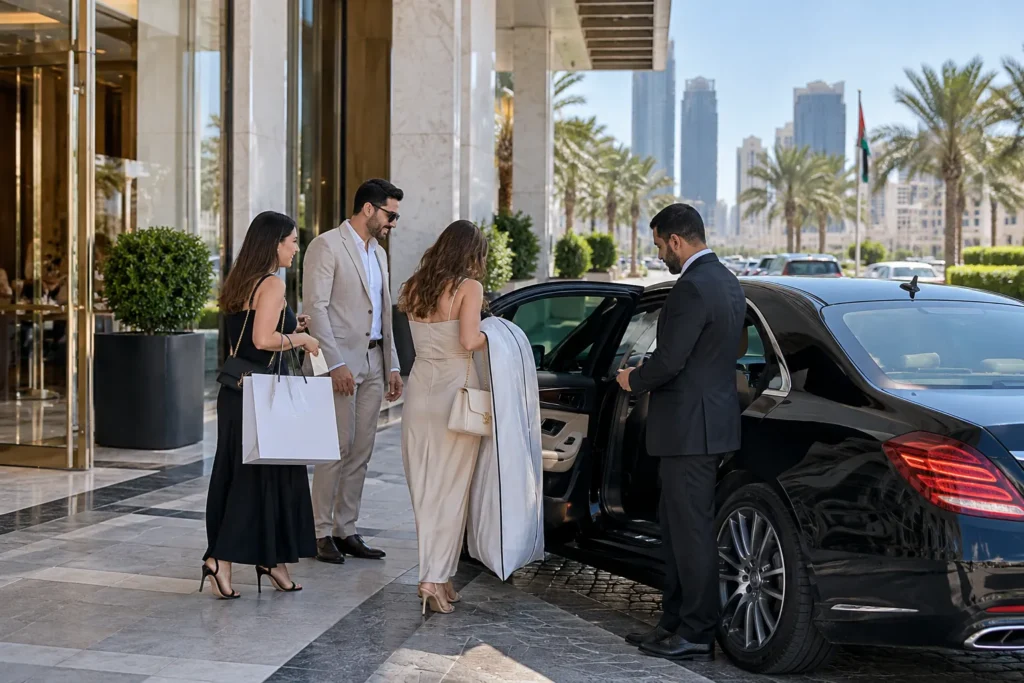
A wedding rarely lives in a single day. Engagement events, dress fittings and gift shopping add their own transport, and they are easier to arrange together.
- A dress fitting or last minute shopping trip fits a shopping chauffeur booking, with bags held in the car.
- A photo session on another day can run on an hourly chauffeur booking, so the car waits between locations.
- A celebration the night before or after can be covered by a night out chauffeur arrangement.
Using one provider across these events means the driver already knows your plans and preferences.
Choosing the Vehicle Without Repeating the Whole Search
The vehicle matters, but it is a smaller decision than the timeline. Start with the number of people each group has, then match the car to the party size and the venue.
- A couple travelling alone suits a luxury sedan, and a Rolls-Royce is a popular choice, as set out in Rolls-Royce chauffeur service.
- A bridal party of four to six needs an SUV or a larger vehicle, so the dresses are not squeezed.
- Check the fleet options early, because larger vehicles are fewer in number.
Common Wedding Transport Questions
How early should the chauffeur arrive on the wedding day? Before the getting-ready work finishes, so the vehicle is waiting rather than the bride. Three hours before the ceremony is a sensible starting point.
Should the bridal car wait at the venue? Usually yes, nearby and out of the way. Agree the waiting spot with the venue in advance.
Do guests need transport if the venue is close? Not always. Out-of-town guests and elders are the groups that benefit most.
What if the ceremony starts late? Tell the chauffeur and the point person as early as possible. A delayed start moves every later leg, and the call sheet makes it easy to update.
How is the price worked out? By vehicle, hours and distance, with waiting time agreed up front. The factors are explained in chauffeur pricing.
Handing the Timeline to Your Chauffeur
The best sign of a well planned wedding transport day is that nobody has to think about it. The cars arrive where and when they should, the couple stays calm, and the guests get home. When your timeline is ready, send it to Chauffeur Emirates or get in touch to confirm the vehicles for your date, and mention the venue and any access rules at the same time. For weddings across Dubai, sharing the venue contact early helps the chauffeur plan the drop-off properly.
