

Good chauffeur etiquette in the UAE comes down to five habits: be ready on time, wear your seatbelt, greet the driver politely and follow their lead on conversation, respect local customs around prayer, Ramadan and privacy, and treat tipping as a thank-you rather than a duty. Nothing here is complicated, and a professional driver will guide you through most situations. The few points that catch visitors out are seating, photographs, eating in the car, and what to do around prayer times.
People often worry about doing something wrong in the back of a chauffeured car, especially on a first trip to the Gulf. The honest answer is that very little can go wrong, and most chauffeurs are used to guests from every culture. This guide explains the customs that actually matter, in the order you will meet them, from the pickup to the drop-off. If you want to know what the driver does on their side, what a chauffeur does covers the role in detail.
Before the Ride Starts
A smooth journey usually depends on what happens in the hour before pickup.
- Share an accurate address, building name and a mobile number that works, since many buildings have several entrances.
- Be ready a few minutes before the agreed time, and tell the driver early if you will be late.
- Mention luggage, fragile items or extra passengers in advance so the right vehicle is sent.
- Let the company know about children, so a suitable child seat is fitted before arrival.
- Ask about waiting time and any grace period, because long waits may be charged after the agreed window.
A company that asks these questions before the trip is usually one that runs well on the day, which is part of why a trusted chauffeur company is worth finding first.
Greetings and First Impressions
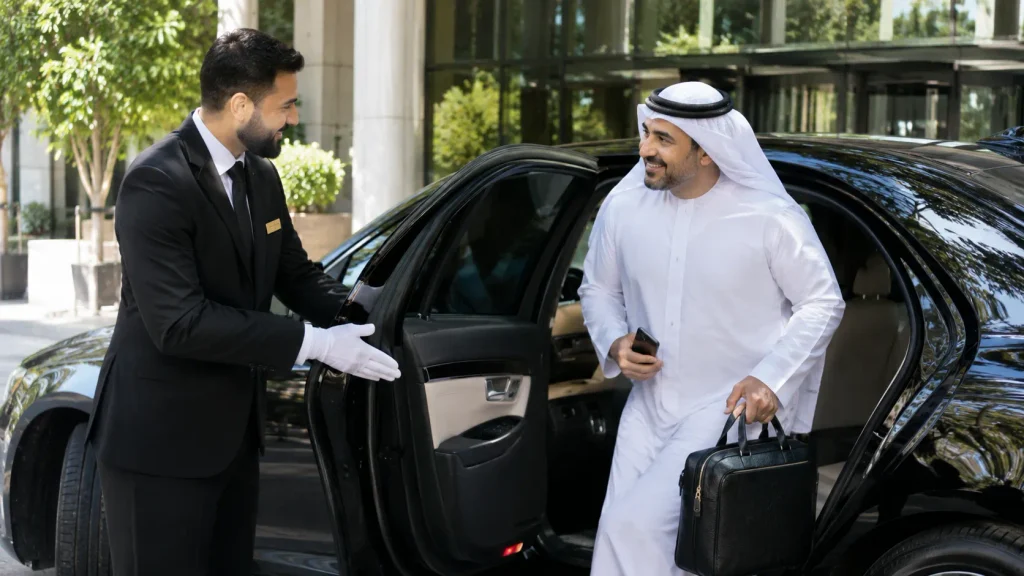
The first thirty seconds set the tone. The driver will normally greet you, confirm your name and open the door.
- A simple “good morning” or “hello” is enough, and a greeting in Arabic such as “salam” is appreciated if you are comfortable using it.
- If you are a man meeting a woman, or the other way round, wait for the other person to offer a handshake rather than starting one.
- Allow the driver to load your bags, since it is part of the service and they know how to place them safely.
- Confirm your destination clearly, and mention any stops you plan to add.
Seating and Space
Where you sit says something small about the trip, and it usually answers itself.
- The most senior or honored guest traditionally sits in the rear seat behind the front passenger, and the driver will often open that door.
- Rear seats are the norm for guests, and sitting in front is fine if the driver and the situation allow it.
- Children under 10 should not sit in the front, and young children need a suitable child seat, as set by UAE rules.
- Everyone in the vehicle should wear a seatbelt, in the back as well as the front, since it is required by law.
Conversation, Calls and Privacy
Professional chauffeurs read the mood of a journey. Some guests want conversation, and many want silence.
- Follow the driver’s cue at first, then say if you would rather talk or work.
- Take calls freely, and consider lowering your voice or using headphones on sensitive ones.
- A good driver does not repeat what they hear, which is part of the standard for executive and corporate travel.
- If you need quiet, say so politely. A driver will not be offended.
Local Customs That Matter in the Car

A few customs are specific to the UAE, and they are the ones visitors most often ask about.
Prayer Times
Chauffeurs observe the five daily prayers, and Friday prayers around 1:15 pm are a fixed point of the week. On a long booking, agree a short break in advance rather than asking at the last minute. The driver will usually arrange it quietly.
Ramadan
During Ramadan, eating, drinking or smoking visibly in daylight is considered disrespectful, including in a vehicle that is parked or stopped in traffic. Ask your driver what is comfortable. Working hours and traffic shift during the month, and a driver who is fasting may need time to break the fast at sunset, so timings on long trips need a little more thought.
Photographs and Privacy
Taking photographs of people without their permission can cause offense and may breach privacy rules. This applies to other drivers, local people, and the chauffeur. Some government buildings and secure areas also restrict photography, so ask before shooting.
Alcohol in the Vehicle
Most providers do not allow drinking in the vehicle, and public drinking is restricted in the UAE. If you are returning from an evening out, the driver is there to get you home safely, which is covered in night out chauffeur bookings.
Food, Drinks and Smoking
Vehicles are kept clean as part of the service, and most are non-smoking.
- Water is usually provided, and sealed drinks are fine.
- Avoid messy food, strongly scented meals, and open containers in a premium cabin.
- If you need a stop to eat, tell the driver and plan it as part of the schedule.
- Ask before smoking or vaping, and expect a polite no in most vehicles.
Tipping: What Is Normal
Tipping in the UAE is appreciated but not required, and a chauffeur service price is a fixed amount agreed in advance. Practice varies by company, and some drivers cannot accept gratuities under company policy.
- Travel guides commonly suggest a modest amount for a single transfer, and a larger one for a full day of waiting and driving, with a thank-you being fully acceptable.
- Recurring clients, such as those on a monthly chauffeur arrangement, often tip at the end of the month or after demanding trips.
- Tip more for long waits, heavy luggage, late nights, or extra effort, and less if you are unhappy with the service.
- Cash in an envelope is the most common way, and card payments may not allow tips.
Etiquette for Different Types of Booking
Each kind of trip has its own expectations, and they are worth knowing before you go.
| Booking type | What helps |
|---|---|
| Airport pickup | Share your flight number and be ready to meet at the agreed point, as with an airport transfer |
| Business travel | Give meeting times and stops in advance, and be clear about where calls should stay private |
| Wedding or celebration | Agree the timeline and decoration rules ahead, as set out in wedding chauffeur bookings |
| VIP arrival or event | Share the guest list, entrance and security needs, similar to a VIP event chauffeur plan |
| Shopping day | Agree on waiting time and bag storage, as shown in shopping day itinerary |
Common Mistakes to Avoid
Most etiquette problems are small, and they are easy to avoid.
- Being late without telling the driver, which affects every later booking.
- Overloading the vehicle with more bags or passengers than were booked.
- Asking the driver to break traffic rules, stop in a restricted area or speed.
- Leaving belongings behind. Check the seat pockets and the boot before you get out.
- Treating a chauffeur like a taxi driver, when a dedicated driver works very differently.
- Raising a complaint during the ride rather than afterward with the company.
Frequently Asked Questions
Do I have to tip a chauffeur in the UAE?
No. Tipping is appreciated but not required, and a chauffeur booking is priced at a fixed amount. If the service was good, a small tip or a sincere thank-you is welcome, and amounts vary by the length and quality of the trip.
Where should I sit in a chauffeured car?
Guests normally sit in the rear, and the most senior passenger traditionally takes the seat behind the front passenger. If you prefer to sit in front, ask the driver. Children under 10 should always sit in the back.
Can I eat or drink in the vehicle?
Water and sealed drinks are usually fine. Avoid messy food, and in Ramadan avoid eating or drinking visibly during daylight hours. Ask the driver if you are unsure.
Is it acceptable to talk to the chauffeur?
Yes. Many drivers enjoy a polite conversation, especially on long trips. Follow their lead and tell them if you would rather work or rest. Business conversations in the back seat are kept private.
What if I need to take a business call?
Take it as normal. The driver will not repeat what they hear, and they can reduce music or distractions if you ask. Use headphones for very sensitive discussions.
How do prayer times affect a booking?
The driver may need a short break for prayers on a long day. Mention it when you book, and plan stops around it. Friday midday is the most important time, so avoid fixed pickups during it if you can.
Can I take photographs from the car?
Yes, of scenery and landmarks. Avoid photographing people without permission, and check restrictions near government buildings and secure sites. If in doubt, ask the driver.
What should I do if something goes wrong during the trip?
Tell the driver at once if it is urgent, then contact the company afterward. Providers handle complaints through a central channel, and a quick message helps them put it right.
Small Courtesies, Smooth Rides
Most of what makes a chauffeured trip pleasant is ordinary good manners, adjusted slightly for local customs. If you are unsure about something, ask the driver, who will have heard the question many times. For more on how the company works, you can read about our team and standards, or arrange a trip with Chauffeur Emirates and get in touch to confirm pickup details in Dubai or any other emirate.
