
Al Ain, the UAE’s Garden City, sits roughly ninety minutes to two hours from both Dubai and Abu Dhabi, making it a realistic day trip rather than an overnight stay. The city’s main draws, Al Ain Oasis, Al Jahili Fort, Jebel Hafeet and Al Ain Zoo, sit close enough together to cover comfortably in a single day with a private driver handling the route between stops. Unlike Dubai’s dense skyline, Al Ain rewards a slower pace built around heritage, greenery and mountain views rather than shopping or nightlife.
Most visitors see Dubai and Abu Dhabi and never make it inland to Al Ain, which is exactly what makes it worth the drive. This guide covers what to actually see, how to sequence a day around it, and why a chauffeured trip suits this particular route better than renting a car yourself.
Why Al Ain Works Well as a Chauffeur Day Trip
Al Ain’s attractions are spread across a city built for driving rather than walking, which changes how a day trip here should be planned.
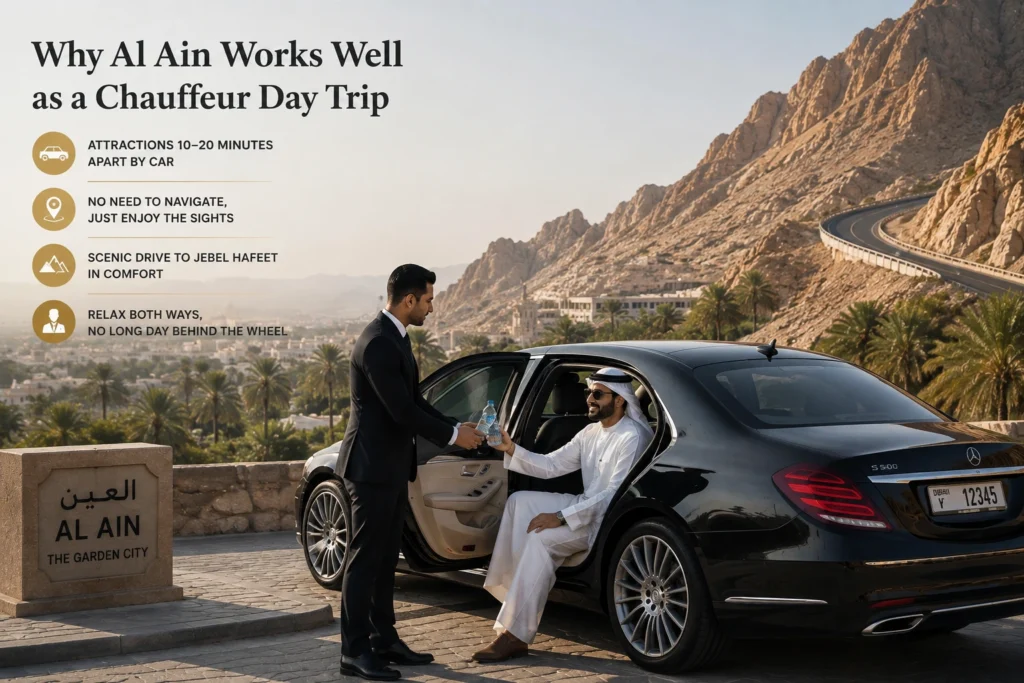
- The main sites sit ten to twenty minutes apart by car, close enough for a full day but too far to walk between in the heat.
- A private driver removes the need to navigate an unfamiliar city while also trying to enjoy the sights.
- The Jebel Hafeet mountain road in particular is a driving experience worth having in a comfortable vehicle from a well-maintained fleet, not something to rush through while also checking directions.
- A round trip from either Dubai or Abu Dhabi means a long day behind the wheel if you’re driving yourself, something a chauffeur-driven trip removes entirely.
Getting to Al Ain From Dubai and Abu Dhabi
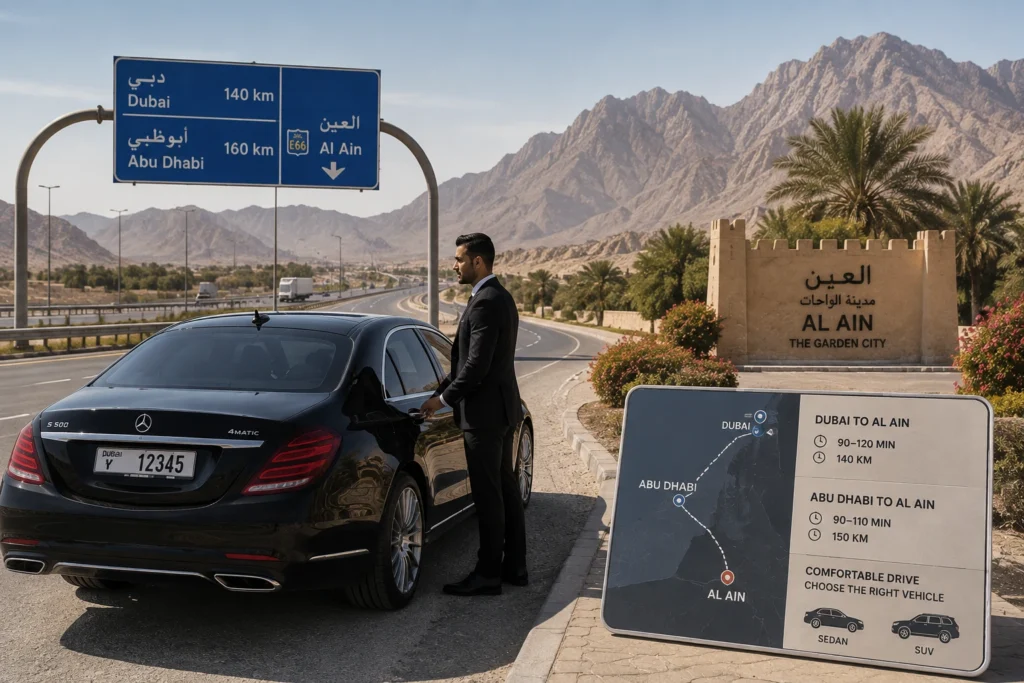
Al Ain sits inland, near the Oman border, which puts it at a similar driving distance from either of the UAE’s two largest cities.\
Distance and Drive Time
The drive from Dubai to Al Ain typically takes around ninety minutes to two hours depending on traffic and starting point, similar in scale to the route covered in Dubai to Abu Dhabi transfers. From Abu Dhabi, the drive runs a comparable length via a more direct inland highway. Either way, this puts Al Ain firmly within day-trip range without needing an overnight stay, which is part of why it’s such an underused option compared to the more obvious Dubai-Abu Dhabi route.
Choosing the Right Vehicle for the Route
A comfortable sedan handles the highway drive well, though travelers planning to combine sightseeing with off-road stops near Jebel Hafeet’s lower slopes sometimes prefer an SUV instead. This is worth discussing with your provider ahead of time, similar to how vehicle choice gets matched to the specific trip for other occasions. Air conditioning performance matters more here than on a short city hop, given how much of the day is spent moving between stops in the heat.
Al Ain Oasis and the UNESCO Heritage Site
Al Ain Oasis sits right in the city center and works well as a first stop, since it sets the tone for the rest of the day.
- The oasis is part of a UNESCO World Heritage listing covering Al Ain’s cultural sites, recognized for its ancient falaj irrigation system still in use today.
- Shaded walking paths run between date palm groves, offering a genuinely cool break from the midday heat.
- Entry is free, and the walk itself takes anywhere from thirty minutes to an hour depending on how much of the oasis you cover.
- Early morning visits avoid both the heat and the busiest crowds, particularly during cooler months.
- Information boards along the main paths explain how the falaj channels move water from underground sources to the palm groves, a system that predates modern irrigation by centuries.
Al Jahili Fort and the City’s Museums
Al Ain’s forts and museums cluster close to the oasis, making this a natural second stop.
- Al Jahili Fort, built in the late nineteenth century, houses exhibitions on the region’s history and a notable photography collection.
- The Al Ain National Museum and Al Ain Palace Museum both sit within a short drive, useful if history is a priority for the day.
- Qasr Al Muwaiji, another historic fort in the area, adds a further stop for visitors with extra time.
- Most of these sites take thirty to sixty minutes each, so combining two or three in a morning is realistic without feeling rushed.
- Several of these buildings were originally residences of the Al Nahyan ruling family, giving visitors a direct link to the personal history behind the UAE’s formation rather than a purely abstract historical account.
Jebel Hafeet: The Mountain Drive
Jebel Hafeet, the UAE’s second-highest peak, offers one of the most scenic drives in the country, and it’s a highlight most visitors specifically plan their day around.
- The mountain road winds up through a series of curves with panoramic views over Al Ain and the surrounding desert.
- Sunset is widely considered the best time to make the drive, when the light softens across the mountains and the city below.
- A viewing area near the summit offers a place to stop, take photos and simply take in the scale of the landscape.
- The drive itself takes around thirty minutes each way from the base, longer with stops along the route.
- The mountain also marks the border area with Oman, adding a geographic curiosity for visitors tracking their route on a map.
Al Ain Zoo and Family-Friendly Stops
For visitors traveling with children, Al Ain offers more family-oriented options than a typical heritage-focused day would suggest.
- Al Ain Zoo sits at the base of Jebel Hafeet and is one of the largest zoos in the region, home to several thousand animals across several hundred species.
- Hili Fun City, an amusement park on the northern side of the city, adds a lighter, more active stop for families with younger children.
- Both sites work well as an afternoon addition to a morning built around the oasis and forts.
- Allowing at least two hours for the zoo alone keeps the visit from feeling rushed, particularly with children in tow.
- Shaded rest areas and food stalls throughout the zoo make it manageable even during warmer months, provided the visit avoids the hottest part of the afternoon.
Green Mubazzarah and the Hot Springs
At the base of Jebel Hafeet, Green Mubazzarah offers a genuinely different pace from the rest of the day.
- Natural hot springs run through the park, popular for a relaxed soak, particularly during cooler months.
- Picnic areas and green lawns make this a good spot to slow down after a morning of walking between heritage sites.
- The park sits directly on the route up to Jebel Hafeet, making it easy to combine both stops without backtracking.
- Weekends tend to draw larger local crowds here than weekdays, worth factoring in if a quieter visit matters.
- A short-stay chalet resort sits nearby for visitors who want to extend their time in the area, though most day-trippers treat this as a stop of an hour or so rather than an overnight destination.
Hili Archaeological Park and the Camel Market
For visitors with a full day rather than a half day, Al Ain’s northern attractions round out the itinerary.
- Hili Archaeological Park preserves Bronze Age ruins, among the oldest archaeological sites in the UAE.
- The Camel Market offers a genuinely local, unpolished glimpse of daily trade, distinct from anything found in Dubai or Abu Dhabi.
- Both sites sit on the same side of the city, making them easy to pair on the way in or out of Al Ain.
- These stops suit visitors specifically interested in history and local culture over the more polished heritage sites closer to the center.
- Visiting the Camel Market earlier in the day tends to catch more activity, since trading slows considerably by mid-afternoon.
Planning Your Day: Timing and Sequencing
The order stops get visited matters more in Al Ain’s heat than it does in a cooler climate.
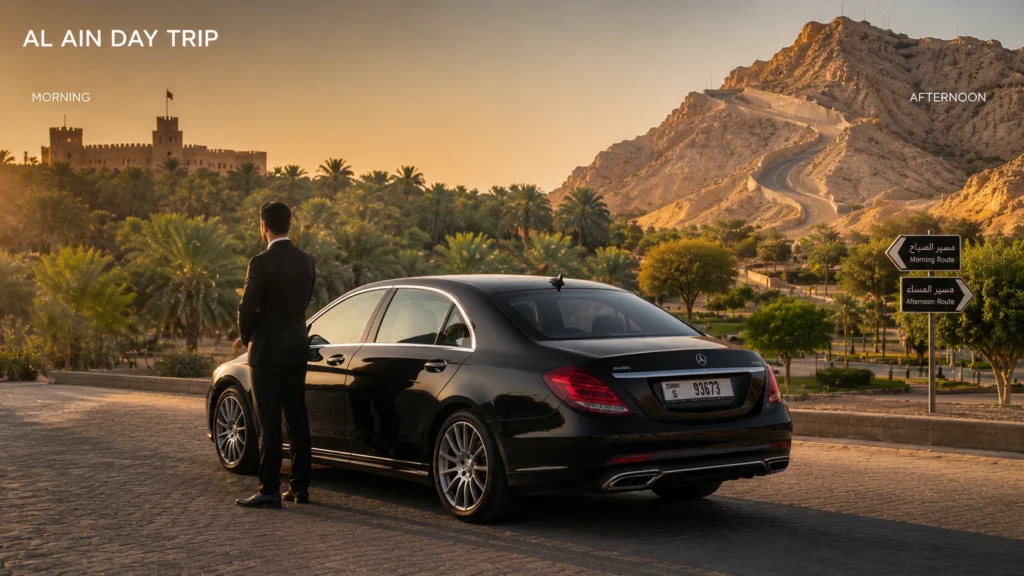
Morning Loop
Starting with the oasis and forts in the cooler morning hours makes the most of comfortable walking conditions before the afternoon heat sets in, particularly outside the winter months.
Afternoon Loop
Shifting toward the zoo, Green Mubazzarah and the Jebel Hafeet drive in the afternoon works well, since much of this loop involves time in the car or shaded areas rather than direct sun exposure.
Sample Al Ain Day Trip Itinerary
This structure balances heritage sites, nature and the mountain drive across a single day.
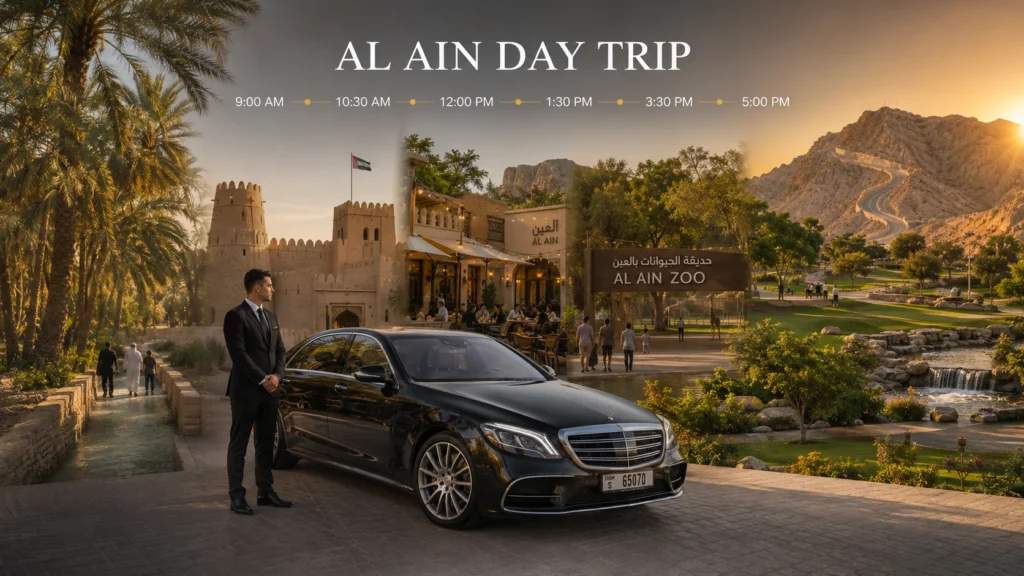
| Time | Stop | Focus |
|---|---|---|
| 9:00 AM | Al Ain Oasis | Walking paths, shaded date palm groves |
| 10:30 AM | Al Jahili Fort | History, exhibitions |
| 12:00 PM | Lunch break | Local restaurant in central Al Ain |
| 1:30 PM | Al Ain Zoo | Family-friendly wildlife viewing |
| 3:30 PM | Green Mubazzarah | Hot springs, relaxed break |
| 5:00 PM | Jebel Hafeet drive | Sunset views from the summit |
Booking a Chauffeur for Your Al Ain Trip
An Al Ain day trip works best as a single, full-day booking rather than a return transfer alone, closer to an extended hourly chauffeur arrangement than a point-to-point trip.
- Confirming a full-day rate in advance is generally more cost-effective than booking the return trip separately from time spent sightseeing.
- A provider familiar with the route can suggest realistic timing between stops rather than relying on a generic map estimate.
- Water and air conditioning matter more here than on a typical city trip, given the heat and the length of the day.
- Confirming your pickup point, whether a hotel in Dubai or Abu Dhabi, in advance avoids any confusion on the morning of the trip.
- Building in a return time buffer for the Jebel Hafeet sunset drive keeps the whole day flexible if earlier stops run longer than planned.
Frequently Asked Questions
How far is Al Ain from Dubai?
The drive typically takes around ninety minutes to two hours depending on traffic and your exact starting point within the city, similar in length to other intercity routes across the Emirates.
Is Al Ain worth visiting as a day trip from Dubai?
Yes, for travelers wanting a change of pace from Dubai’s skyline, Al Ain’s oasis, forts and mountain scenery offer a genuinely different side of the UAE within a manageable driving distance, without requiring an overnight stay.
What is Al Ain best known for?
Al Ain is known as the UAE’s Garden City, recognized for its palm oases, historic forts, and Jebel Hafeet, the country’s second-highest mountain, alongside its status as home to a UNESCO World Heritage Site.
Can I visit Al Ain and Abu Dhabi in the same trip?
Yes, some visitors combine both, particularly since Al Ain sits within the Emirate of Abu Dhabi, though a full exploration of both usually works better across two separate days than a single rushed one.
Is Jebel Hafeet safe to drive at night?
The mountain road is well maintained and commonly driven at sunset, though a professional driver familiar with the route removes any concern about navigating the curves in low light.
How much time should I set aside for Al Ain Zoo?
At least two hours is a realistic minimum, more if traveling with children who want to spend longer at specific exhibits.
Is Al Ain hotter than Dubai?
Al Ain’s inland location means summer temperatures often run slightly higher than Dubai’s coastal climate, making early morning or evening visits especially worthwhile during the hottest months.
Do I need a full day to see Al Ain’s main attractions?
A full day allows a comfortable pace across the oasis, forts, zoo and mountain drive, though a shorter half-day trip focused on just two or three sites is also realistic if time is limited.
Planning Your Al Ain Day Trip
Al Ain rewards visitors willing to leave Dubai or Abu Dhabi’s skylines behind for a day, offering heritage, greenery and mountain views that neither coastal city quite matches. Sequencing the day around the morning coolness and the sunset mountain drive makes the difference between a rushed itinerary and one that actually feels relaxed. If you’re planning a visit, you can arrange intercity transport to Al Ain with Chauffeur Emirates or get in touch to plan the route and timing for your day.
Sources: UNESCO World Heritage Centre, “Cultural Sites of Al Ain”; Visit Abu Dhabi, official tourism board
